
In sports, certain athletes inevitably survive in the public consciousness solely because of a solitary moment from their careers.
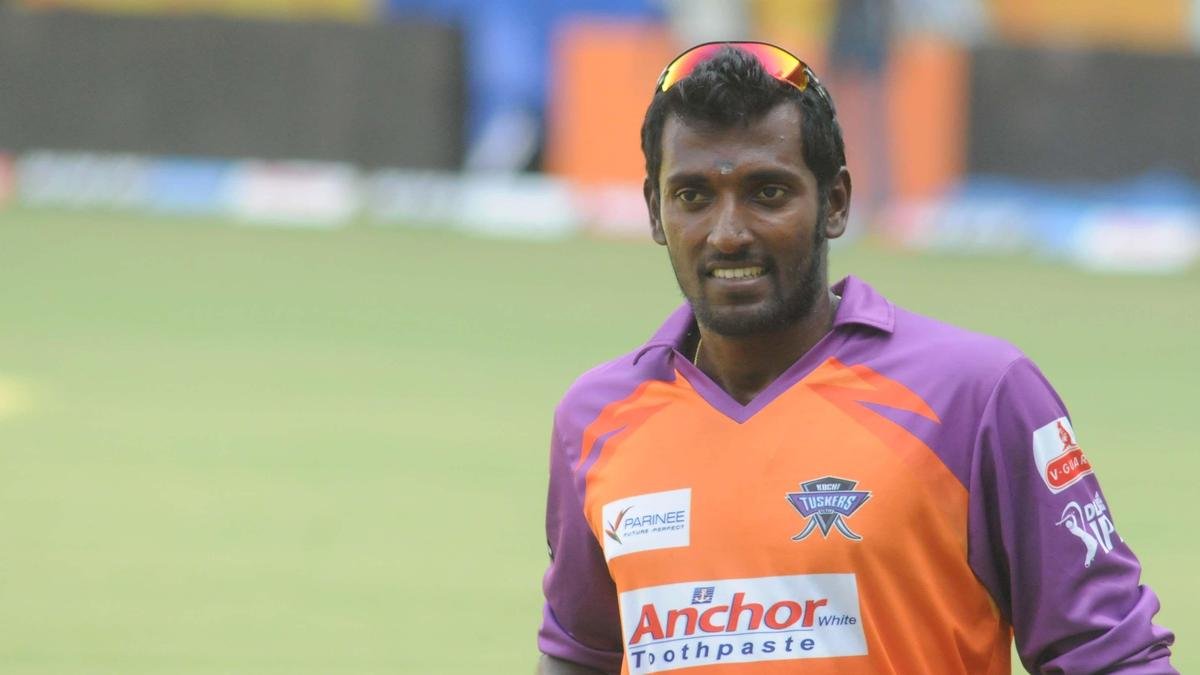
More often than not, that incident would be one drenched in triumphant glory. But not all are that lucky. There are a few who, unfortunately, are remembered only because they ended up on the wrong end of damning trivia, like Prasanth Parameswaran.
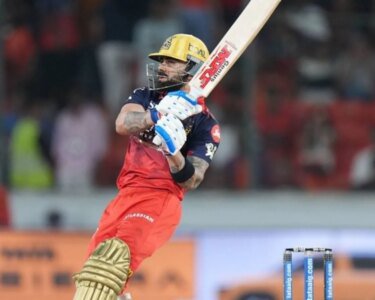
For the average IPL fan, Prasanth’s name would bring up just one visual – that of Chris Gayle mercilessly tearing him down to score a record-breaking 37-run over in IPL 2011.
Back then, Gayle was in savage batting form, rewriting the norms of T20 cricket. Considering the way he was hunting down bowlers, it was only a matter of time before someone suffered an eye-popping over like that. To Prasanth’s misfortune, it happened to him.
To this day, Prasanth hasn’t managed to shake off that cross. “I get a lot of reminders of that day when someone concedes a lot of runs in an over,” he says in an interview with sports star.
On that day, more than 15 years ago, Prasanth, playing for the now-defunct Kochi Tuskers Kerala, sent down seven deliveries (the second was a no-ball) in the third over of the second innings. RCB opener Gayle dispatched four of them for sixes and three of them for fours.
Looking back at the highlights of that unforgettable phase of play, there are a few things that stand out. First was the overwhelming sense of helplessness that the entire KTK side felt in the face of Gayle’s onslaught.
Then there was the question of the necessity of the whole act itself. RCB was chasing just 126 and could have coasted home even without an over like that. Gayle did it just because he could do it.
So dazed was Prasanth from that outrageous assault that he failed to tally the damage he had sustained.
“Actually, while the match was going on, I was under the belief that I had given away 32 runs. I thought the last four was a bye. It was only when I came back to the dressing room and saw the highlights on the TV that I realized that it was actually 37,” says Prasanth.
Even after watching his first two deliveries zoom over the off-side fence, the left-arm pacer kept bowling into Gayle’s arc and kept getting punished. But, for Prasanth, this wasn’t the case of being overwhelmed.
“It was not like I was scared. In that situation, I was just going with the flow. I have experienced losing my bowling shape and action when put under pressure. This wasn’t like that. I wasn’t that experienced. Those were my starting days. We didn’t have much guidance back then.”
Prasanth’s inexperience extended to his judgment of the world-class batters whom he was squaring off against. Just a week before the RCB game, he had won the player of the match award on his IPL debut, after claiming the prized wicket of Virender Sehwag.
“To be honest, I really didn’t have an understanding of how dangerous a Gayle or a Sehwag were. I had never bowled to any of them. In fact, I was more worried about the batters whom I used to play against regularly in domestic cricket – someone like Robin Uthappa, who was then with Karnataka.
“It was because I bowled to them multiple times and gained an understanding of their abilities and powers. Then it works into the mind. That was the mindset. It was only after I started coaching that I gained a better understanding,” admits Prasanth.
What makes the 37-run over even more fateful is the fact that Prasanth, then a 25-year-old playing his maiden IPL season, wasn’t supposed to play that game. In fact, he didn’t particularly want to.
“Back then, my mindset was such that I considered it a lucky escape if I wasn’t picked for an IPL game. I had no idea that IPL could be a potential gateway to the Indian team. We all believed that the Ranji Trophy was the only route to the national side. IPL was just another tournament.”
Prasanth was quick to offer an honest clarification. “I am not saying that I would have fared better if I were prepared,” he added with a chuckle.
Once the shock factor receded, Prasanth soon found himself at the receiving end of mockery and criticism. With time, he has learned to deflect the barbs.
“I have never felt it as a big deal. Even then, sometimes people try to poke me by asking, ‘Annu adi kittiyile’ (You got hit that day, no?). I usually respond by saying, ‘It has happened anyway, and there is nothing we can do about it. Enne thaliyath allalo (It is not like he beat me up physically),” said Prasanth, with a wholehearted laugh.
“What? [those who mock him] have ignored is that I played the IPL two more seasons after that. That too with RCB. If I weren’t good enough, they wouldn’t have picked me right,” he asks.
Prasanth’s time with RCB also presented him with an opportunity to come face-to-face with the man who ‘changed his life.’
“I joined RCB as an injury replacement in 2012 and played almost straight away. That year, I didn’t have the time to get to know anyone in the team. In the second year, I got closer to everyone in the team.
“One day, in 2013, I went up to Gayle and asked if he remembered me. He said no. Then I told him about the 37-run over. ‘Oh, that was you? Really sorry, man,’ he responded. We actually bonded a lot during that time,” recollects Prasanth.
Gayle’s response wasn’t uncharacteristic. For him, the 37-run over was just another flamboyant high point in his rise to become the T20 cricket’s poster boy.
For Prasanth, it proved to be an unwanted calling card. All the work he had done beforehand to get to that point and everything he achieved from thereon condensed into that singular moment.
Prasanth isn’t bitter about it, though.
“It’s just that I didn’t produce a standout performance after that. If I had won a few man of the matches after that, the collective memory would have been overwritten,” he says.
Prashant’s top-level playing career ended in 2015. He has then worked as a coach and a selector at various levels.
Looking back, Prasanth identifies one major silver lining from the whole Gayle ordeal.
“Thankfully, social media wasn’t that popular back then,” he says, with an unsubtle hint of relief.
Published on May 26, 2026