
Over 4% of the global population experiences anxiety,
according to the World Health Organization, but there’s one interesting cause that directly impacts QSRs: ordering a meal.
A study released this week from payment tech and software
company Global Payments Inc. explores the “hidden impact of stressful quick service restaurant (QSR) ordering moments.” The “order anxiety” study of 2,000 U.S. QSR customers
took place in March.
QSR operators increasingly rely on promos and meal deals to drive revenue, but their efforts may go unnoticed when customers feel stressed while ordering. Over 60% of
those surveyed said “they default to their usual order when rushed, likely ignoring special offers and new items.”
And while ordering a burger at the drive-thru may seem like a
low-stress activity for most, that isn’t always the case. The study found 29% of respondents said, “ordering at a QSR is more stressful than public speaking.” A full 20% thought it
was more stressful than going through airport security.
advertisement
advertisement
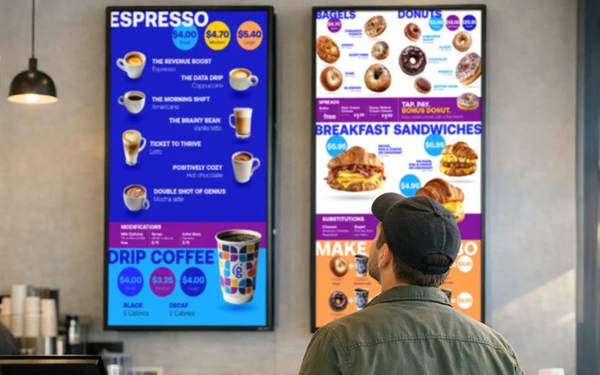
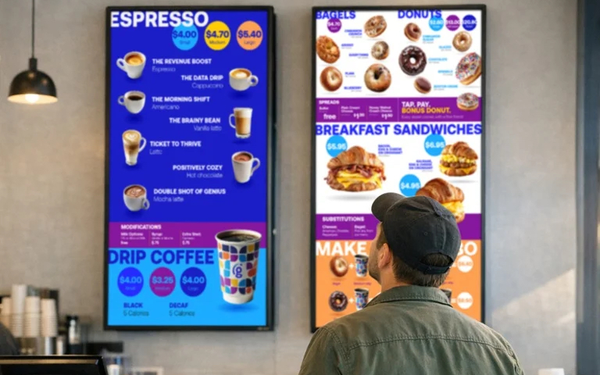
Order anxiety is primarily caused by “decision paralysis” due to large menus. Sixty-three percent of respondents said they
find large menus “overwhelming,” with 37% saying they have actually abandoned an order because the process felt “rushed, unclear or uncomfortable.”
“Our research
shows that 80% of customers would change their habits if ordering was easier,” said Chris Siefken, president of restaurant POS at Global Payments. “Adopting a smarter menu and offering
multiple, fully integrated ordering channels are powerful ways to elevate the guest experience and support revenue growth.”
“Easier ordering” also prompted 45% of respondents
to say they would try new items on the menu, with 17% saying they would spend more overall.
“Social pressure” was also found to spike stress levels, with 64% of respondents saying,
“they are extremely or very aware of people waiting behind them in line,” and 48% citing “long lines” as their top stressor.