
Google brought new Universal Commerce Protocol (UCP) features to
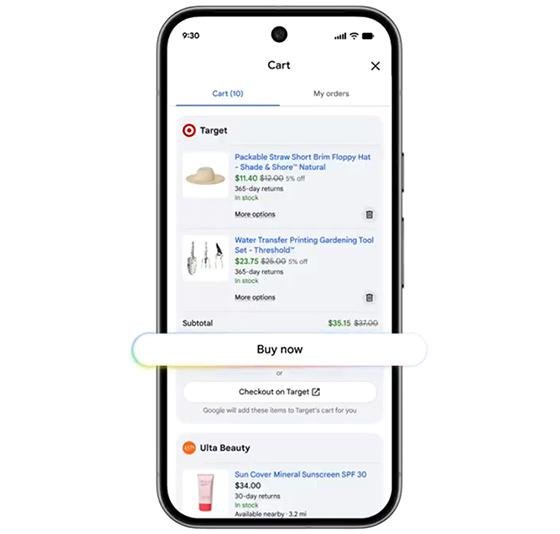
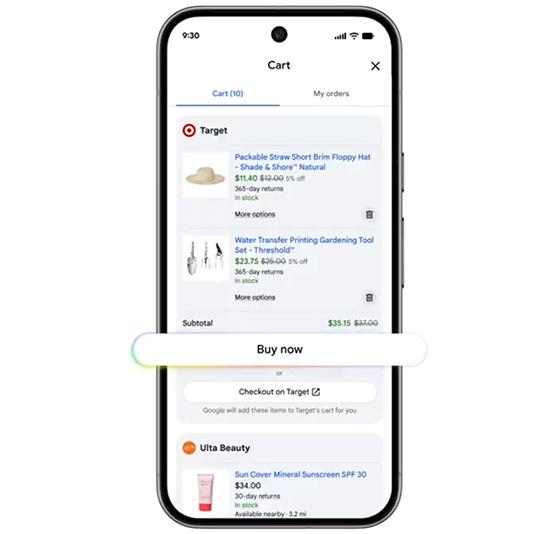
retailers on Wednesday with the launch of “Universal Cart” to introduce what the company calls “intelligent shopping.” It works across retail and services like Search.
When
shoppers are ready to buy, UCP allows them to check out with participating brands on Google Pay, which is done in just a few taps.
Consumers can also transfer items to the merchant’s site to
complete their purchase. Retailers always retain the merchant of record.
Nike, Sephora, Target, Ulta Beauty, Walmart, Wayfair and Shopify are early adopters, along with merchants such as Fenty
and Steve Madden.
Universal Cart can hold products that consumers are considering from anywhere across Google while browsing Search, during chats with Gemini,
watching YouTube, or reading Gmail.
advertisement
advertisement
The cart tracks deals, monitors price drops, surfaces price history insights and alerts users when items are back in stock.
A key part of scaling
agentic commerce is bringing it to more people, so Google also brought UCP to advertising campaigns.
When marketers at brands that integrate UCP serve consumers exclusive promotions with
Direct Offers or run Shopping ads on YouTube with product feeds on DemandGen campaigns, consumers can make purchases immediately.
UCP is structured to give advertisers higher conversion
metrics without losing their direct customer relationships.
Consumers also retain buy-now and pay-later options, with Affirm and Klarna embedded into Google Pay.
Google has extended
UCP checkout to new industries including hotel bookings and local food delivery.
It also will roll out across Canada and Australia in the coming months, followed by the U.K.
In the
coming months, consumers will be able to easily book their next hotel right from AI Mode in Search, or order food delivery from a conversation in Google Maps, according to Google.
New ad
services and support for retail require new measurement tools. With AI-assisted Demand Gen, marketers can combine settings from an existing campaign like Performance Max with best practices that drive
performance.
Advertisers maintain transparency into all campaign settings and may adjust prior to publishing.
Advertisers can use “Campaign Type Attribution” to isolate all
conversions from Demand Gen, allowing for accurate performance comparisons against channels like paid social.
They can also measure how Demand Gen complements Performance Max with Uplift
Experiments and leverage expanded and privacy-safe, third-party integrations with partners such as TransUnion to connect YouTube exposure to business outcomes across their entire media mix.