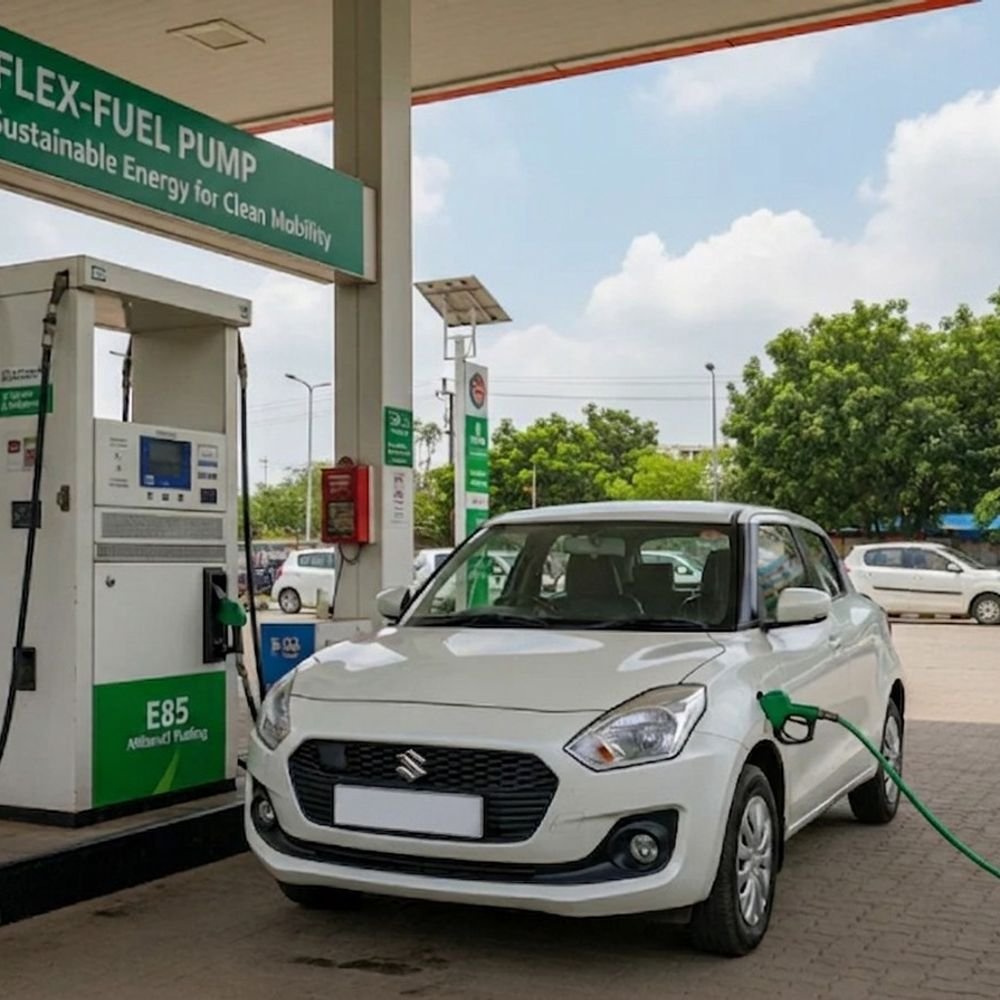
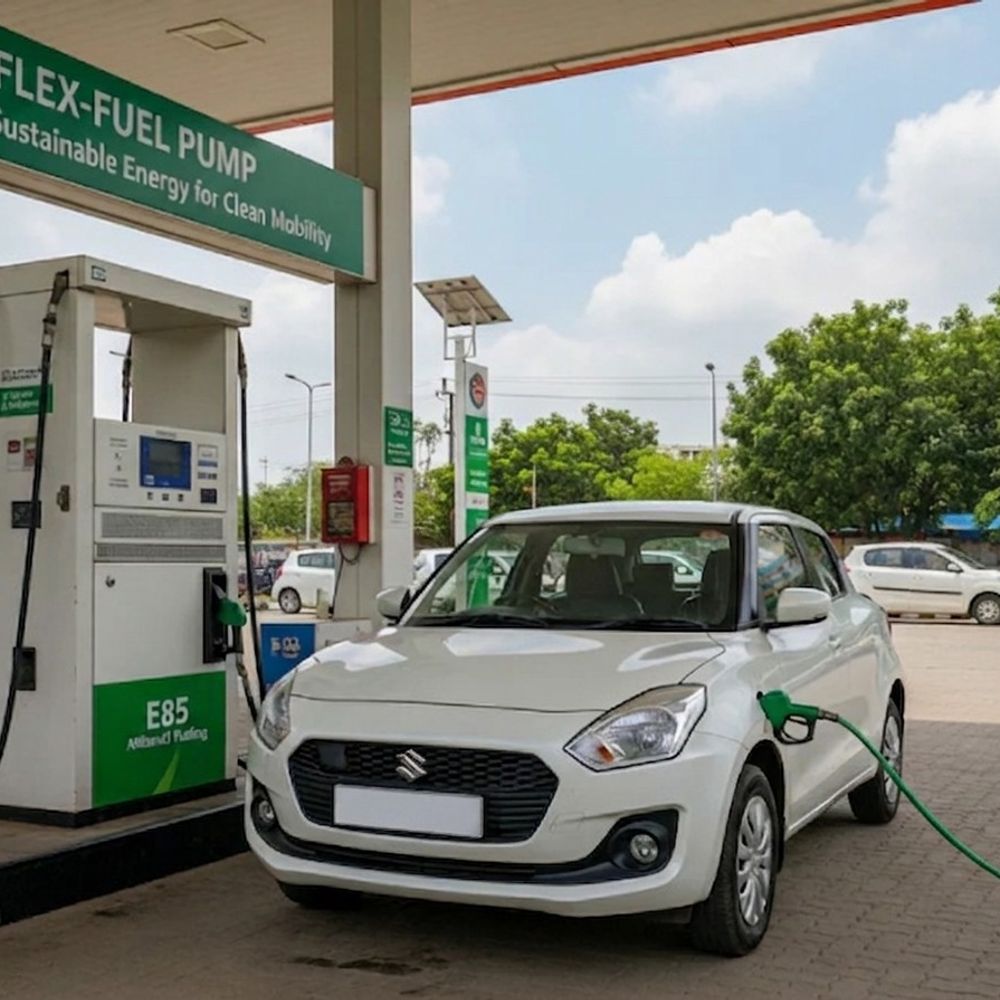
In view of the crude oil supply crisis amid the Iran-US conflict, the Indian government is now moving towards E85 flex-fuel. The government may soon issue a draft notification for the approval of E85 fuel, for which a consensus has been reached in the market. The aim is to reduce dependence on Gulf countries. India imports 90% of its crude oil needs. Of this, more than 50% comes from West Asian countries and reaches through the Strait of Hormuz. This route is closed due to Iran-America tension, due to which the price of crude oil has crossed 100 dollars. The cost of crude oil is not only a burden on the country’s economy but also a challenge to self-reliance. For this reason the government is now focusing on ethanol fuel. Currently, petrol with 20% ethanol is being sold in E85 fuel which contains 85% ethanol and 15% petrol. Currently, sale of E20 fuel is mandatory across the country. Ethanol is made from agricultural products like sugarcane juice, corn and rotten grains. This fuel also helps in reducing carbon emissions in the environment. Auto industry ready, waiting for notification. Automobile industry has already shown its preparedness regarding flex-fuel technology. According to Vikram Gulati, Country Head of Toyota Kirloskar Motor, the biggest advantage of flex-fuel is that as a country we will not be dependent on imports. The government is now working on a policy of promoting flex-fuel vehicles instead of mandating E85 as a regulated fuel. Challenges will have to be addressed on these 4 fronts. SP Global Director Puneet Gupta says that a large ecosystem will be required to adopt E85. There are 4 main challenges in this: Mileage and price can become a hindrance. According to experts, the bigger challenge than technology is the price and mileage of fuel. The mileage of flex-fuel vehicles may drop by 20 to 30% due to ethanol’s lower energy density. To compensate for this shortfall, the price of fuel will have to be kept low. Toyota, Maruti have already introduced ethanol vehicles. Companies like Toyota and Maruti Suzuki have already introduced vehicles running on high ethanol blend. TVS Motor Chairman Sudarshan Venu has also indicated that the company is planning to introduce ethanol-powered vehicles in several of its segments, including Apache. There is a need to emphasize on tax benefits. Experts say that the government should work as a policy enabler instead of giving subsidies. This includes lower tax on FFV (Flex Fuel Vehicle), huge difference in the prices of ethanol compared to petrol and giving credit considering ethanol as carbon-neutral. Knowledge Part: What is a flex-fuel engine? It is an engine that can run on more than one type of fuel (such as pure petrol or any petrol-ethanol mixture). It has sensors that detect the fuel mixture and automatically adjust the engine settings.
Source link