

- hindi news
- tech auto
- Flex Fuel Vehicle Launch Stuck: Auto Firms, Oil Companies Clash | Govt Mediates
New Delhi21 minutes ago
- copy link
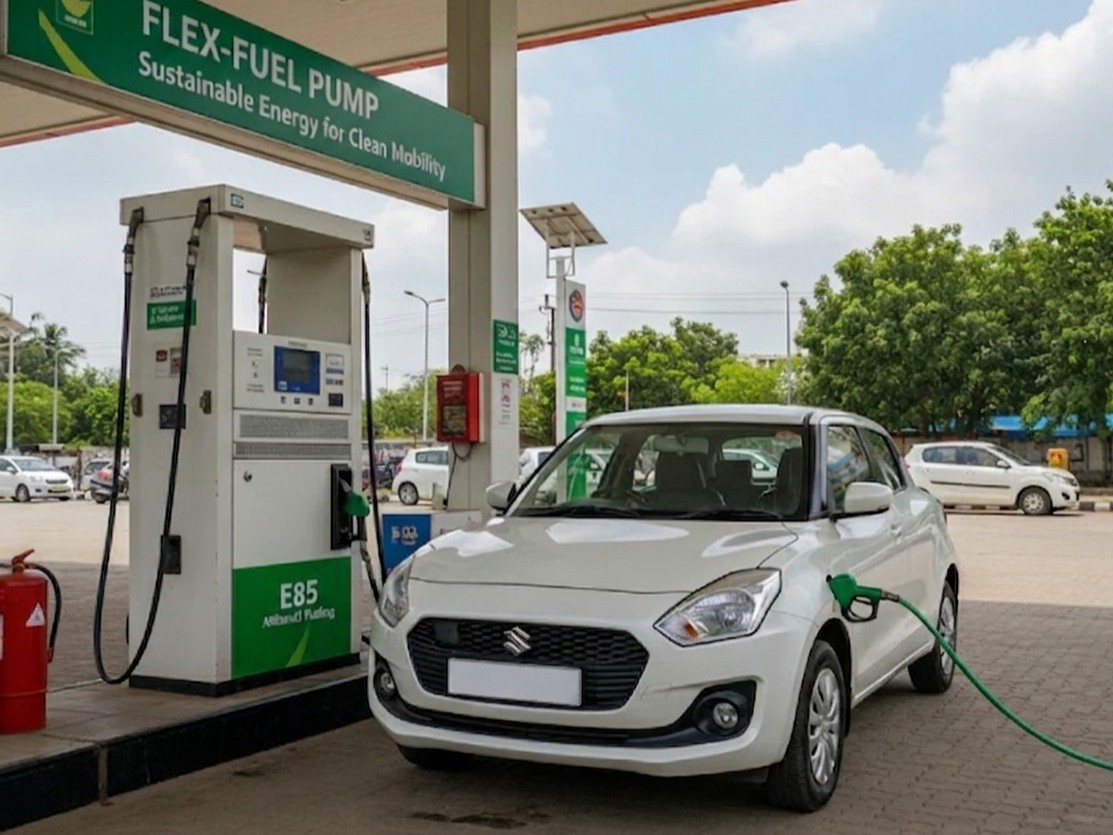
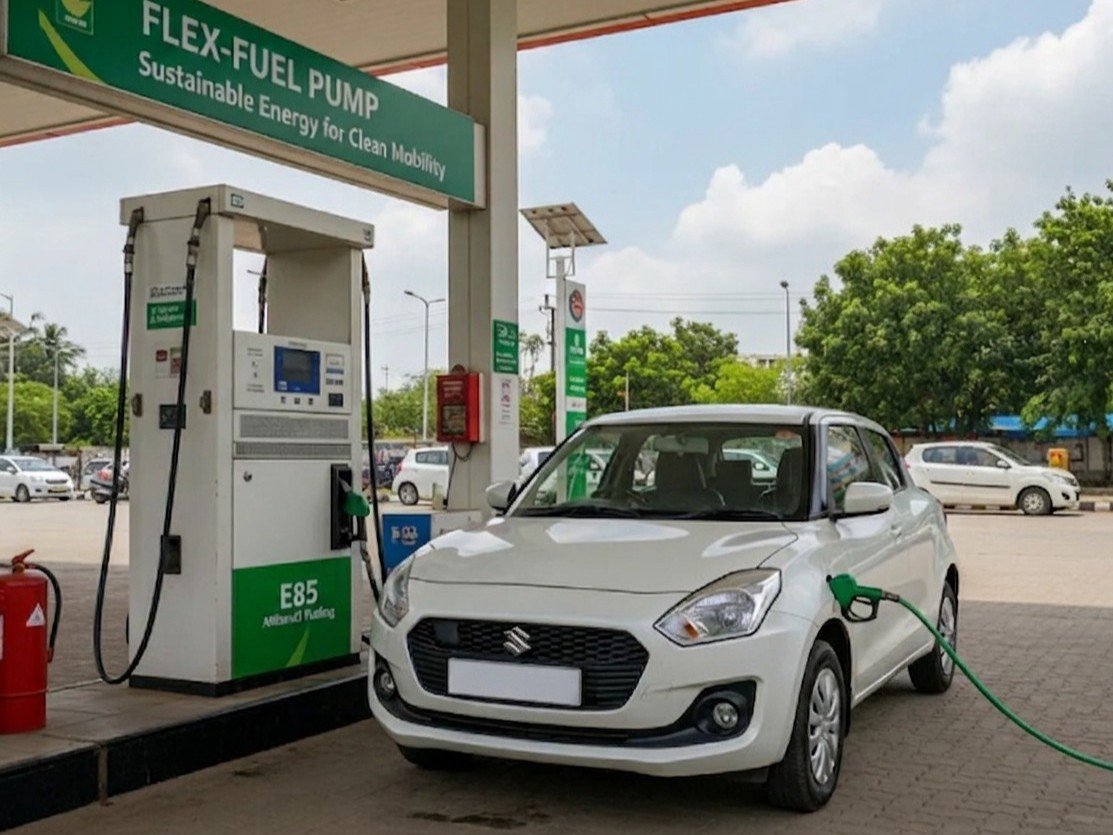
The government wants to rapidly introduce flex-fuel vehicles on the roads to reduce the dependence on petrol in the country, but this plan is now stuck in the dilemma of ‘which comes first, the chicken or the egg’.
Automobile companies are not ready to manufacture high-ethanol blend vehicles on a large scale unless flex fuel is available in sufficient quantity in the market.
At the same time, oil companies are reluctant to invest in the storage and supply of fuels like E85 and E100 until vehicles running on them come on the roads. Now the government is talking to both the parties.
What is flex-fuel and India’s need?
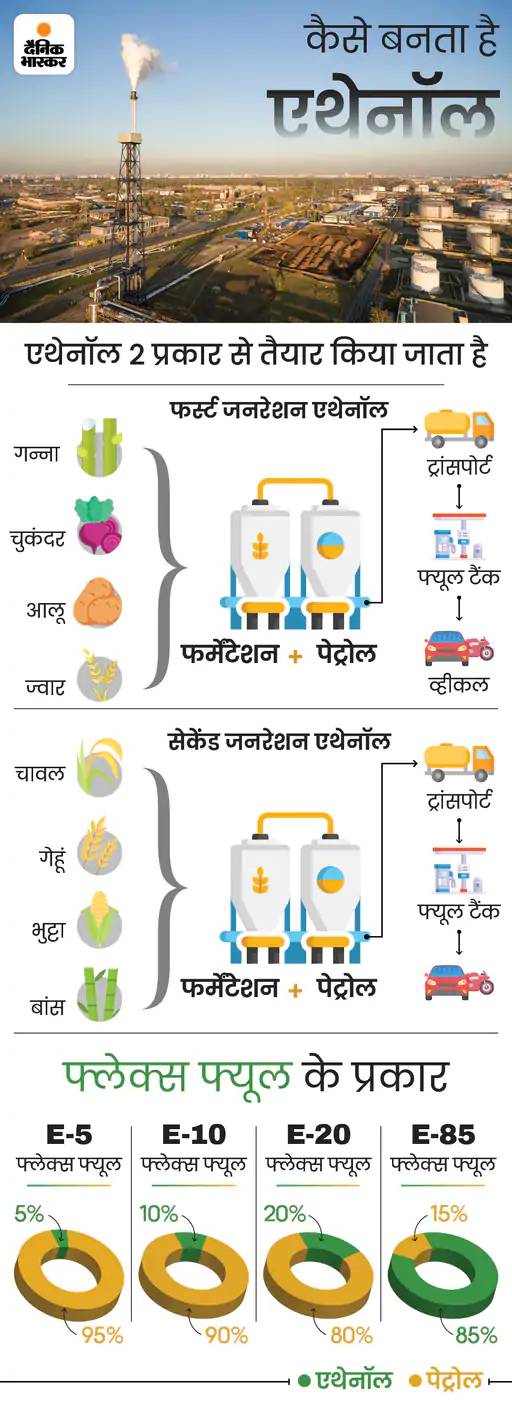
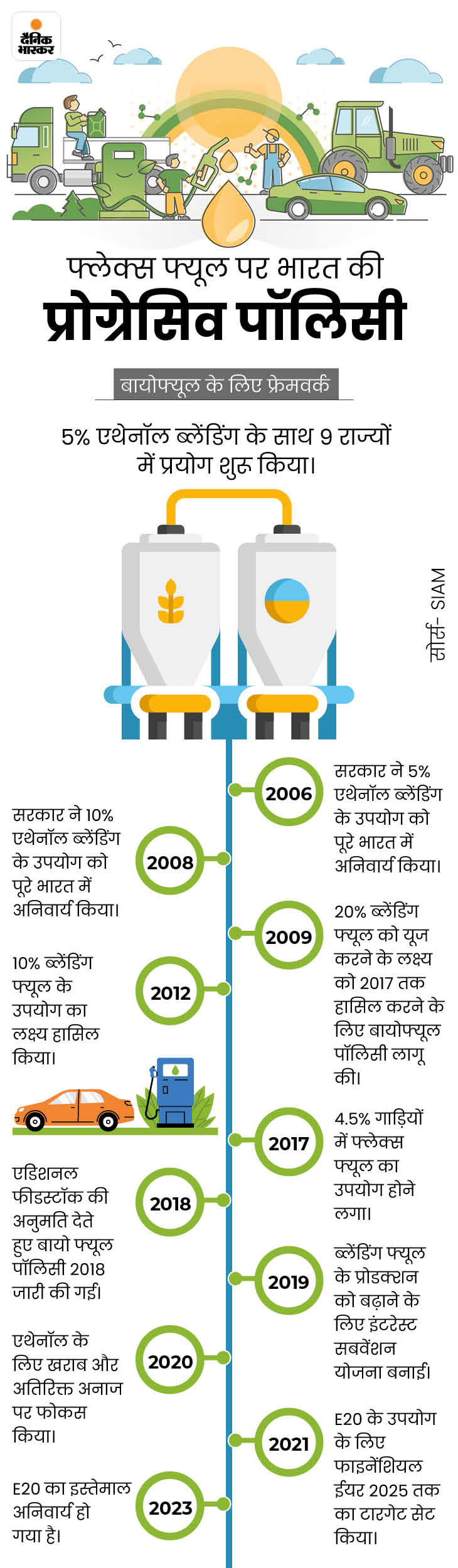
Flex-fuel vehicles are different from normal vehicles because they can run on ethanol-mixed petrol in any quantity along with petrol. Currently, 20% ethanol (E20) petrol is mandatory in India.
The government now wants to move towards flex fuel like E85 (85% ethanol + 15% petrol) and E100 i.e. 100% ethanol, so that the import of crude oil can be reduced.
Ethanol is made from agricultural products like sugarcane juice, corn and rotten grains. This fuel also helps in reducing carbon emissions in the environment.
Since the war in the Middle East started on February 28, crude oil prices have increased from $ 70 to $ 100 per barrel, due to which India’s import bill has increased rapidly.
Concern of oil companies: fear of ethanol stock getting spoiled
Officials of oil companies say that it is risky to store high-ethanol blended fuel for a long time. If the stock is not used immediately, the ethanol absorbs moisture, which may damage or corrode the engine. Companies believe that unless demand is assured, setting up storage infrastructure is a loss-making deal.
Demand of auto sector: clarity on fuel supply
On the other hand, auto companies argue that flex-fuel vehicles will be costlier than normal petrol vehicles. In such a situation, customers will buy them only when they are assured of availability of fuel across the country. Industry experts say that until there is clarity on fuel supply, it is difficult to generate demand for these vehicles.
Government’s priority is to reduce crude imports
Due to the ongoing war between America and Iran, crude oil prices have crossed $100 per barrel. India imports about 90% of its oil needs. Although the oil import bill has declined to $123 billion in fiscal year 2026 from $137 billion last year, the government wants to reduce it further. PM Narendra Modi has also emphasized on adopting alternative fuels in view of the energy crisis.
Ethanol producers have surplus stock, appeal to government
Ethanol producers of the country are currently facing the problem of overcapacity. According to the All India Distillers Association (AIDA), they have made about 20 billion liters of ethanol, while against the government’s 20% blending target, orders for only 11 billion liters have been received. Ethanol makers have written a letter to the government demanding incentives and higher blending targets for flex-fuel vehicles.
Learning from Brazilian model and suggestion of pilot project
Experts say that India should learn from Brazil, where flex-fuel vehicles were introduced in 2003 and today more than 90% of new vehicles there run on this technology. TERI Associate Director Sanyukta Subuddhi has suggested that a ‘pilot project’ should be started on a small scale. This will provide necessary data to oil and auto companies and it will be easier to roll out on a large scale.
Saving foreign exchange: Minister enumerated the benefits
According to Petroleum Minister Hardeep Singh Puri, India has saved foreign exchange worth about $19.3 billion (about Rs 1.6 lakh crore) in the year 2025 due to E20 blending. Experts believe that if the government allows purchase of both flex-fuel vehicles and fuel, then this deadlock can be broken.
Toyota, Maruti have introduced ethanol vehicles
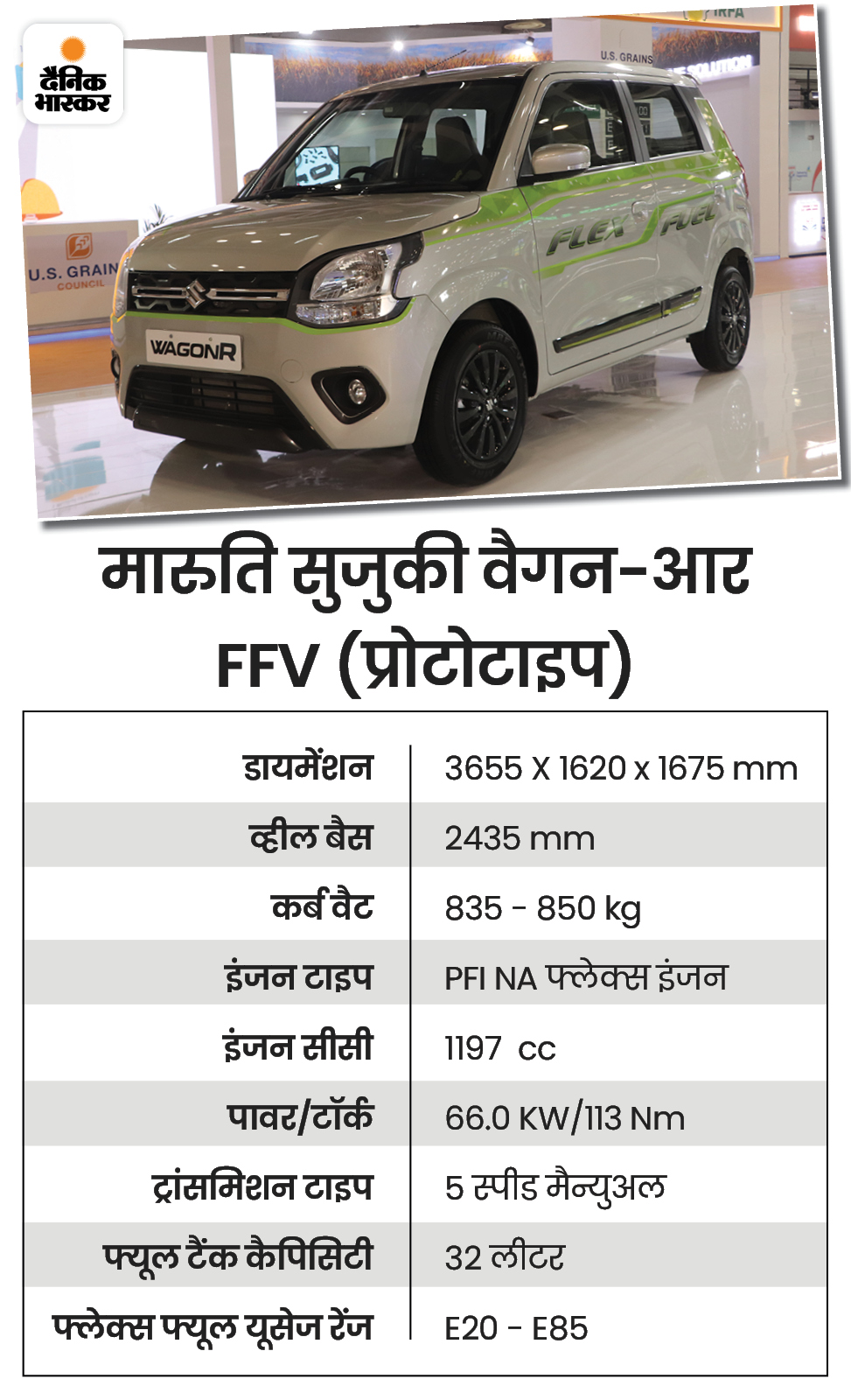
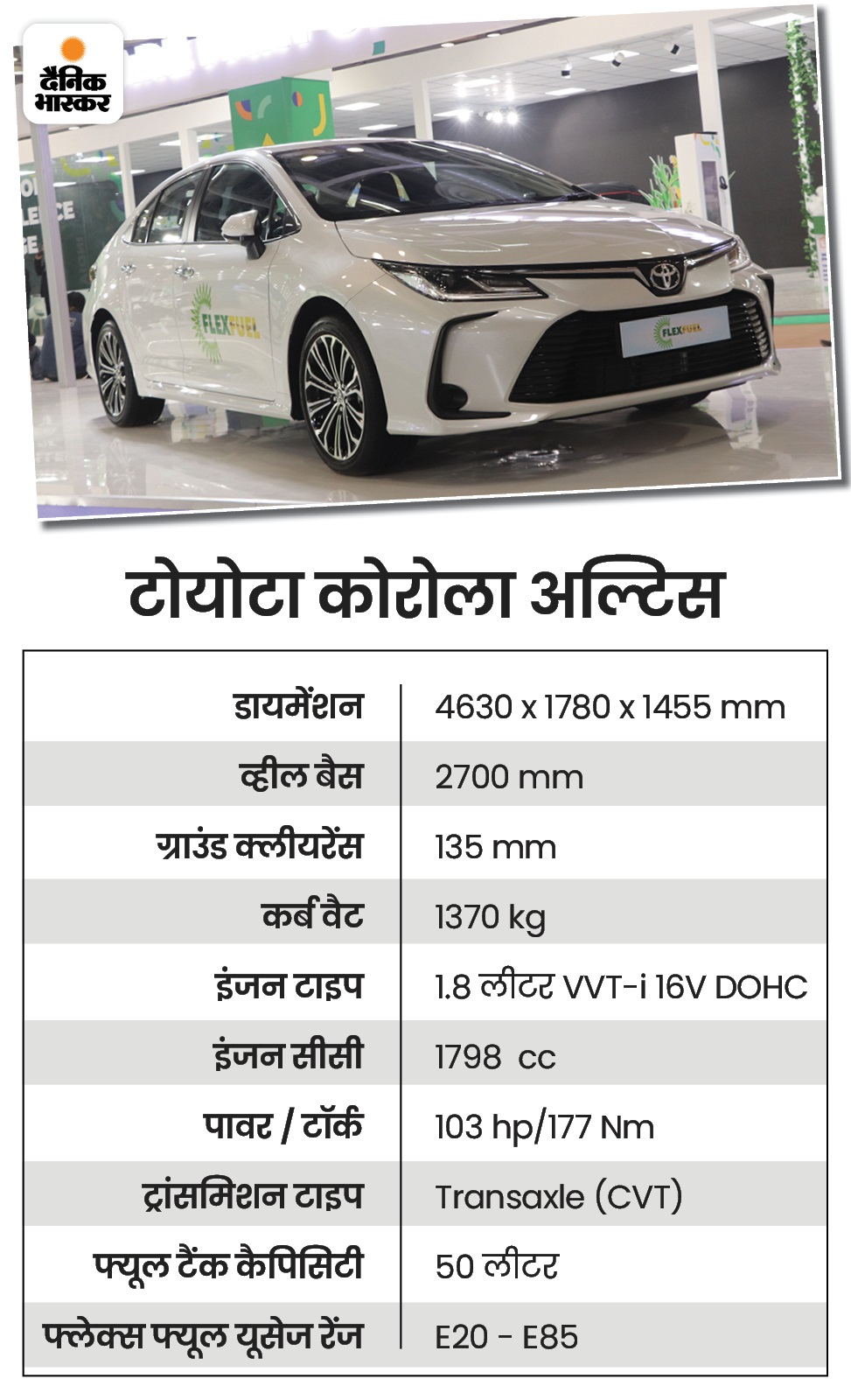
Companies like Toyota and Maruti Suzuki have already introduced vehicles running on high ethanol blend. TVS Motor Chairman Sudarshan Venu has also indicated that the company is planning to introduce ethanol-powered vehicles in several of its segments, including Apache.
Challenges will have to be addressed on these 4 fronts
Puneet Gupta, director of S&P Global, says that the adoption of E85 will require a large ecosystem. There are 4 main challenges:
- Installation of separate pumps and dispensers at fuel stations.
- Testing and validation of infrastructure.
- Huge increase in the capacity to make ethanol.
- A long and clear roadmap of 5 to 15 years from the government.
Mileage and price can become a hindrance
According to experts, the bigger challenge than technology is the cost of fuel and mileage. The mileage of flex-fuel vehicles may drop by 20 to 30% due to ethanol’s lower energy density. To compensate for this shortfall, the price of fuel will have to be kept low.