
Back when it was easy to be an LGBTQ+ ally,
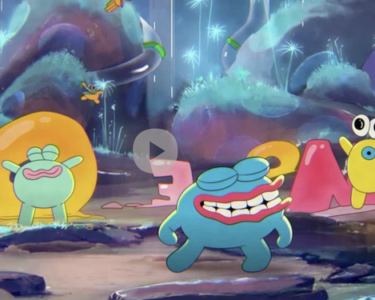
plenty of brands proudly flashed rainbow colors in all sorts of unexpected ways – remember Skittles shedding all its colors, Gillette’s “First Shave,” Cheerios’ “Two Dads” or Lego’s bold launch
of “Everyone is Awesome”? Or when it seemed like every brand slapped a rainbow on their logo, giving the whole community a performative sense of ick? These days, even a little rainbow-washing might
count as an act of corporate bravery.
“It seems we are in Year 2 of Pride hushing,” says Phillip Haid, founder and CEO of Public Inc., a cause-related ad agency in Toronto. “The current
volatile and divisive environment is giving companies pause, which is both understandable and disappointing.” The pullback is quantifiable: 39% of companies reduced their Pride Month engagement in
2025, up from just 9% the year before, according to Reid Litman, global consulting director at Ogilvy.
advertisement
advertisement
Corporate America has ingested the current attack on diversity, equity and inclusion
– and everything that used to be fun about branding’s brightest, loudest month – so thoroughly that it has created a massive moment of cognitive dissonance for marketers: They’re now (more
or less) required to ignore a cause that is enthusiastically supported by a supermajority of customers.
New research from GLAAD, the nonprofit devoted to promoting authentic LGBTQ+ stories,
finds that 68% of Americans agree that brands and companies should be able to show support to the LGBTQ community during Pride if they want to. And 76% are more likely to trust a brand that sticks to
its values and stands up for what is right, even if it is controversial, with almost as many – 73% – saying they believe CEOs have the responsibility to speak up for issues their customers
and shareholders care about. (MRI-Simmons did the study, with a sample of more than 5,000 representative people.)
That makes the few brands bold enough to celebrate Pride extra admirable
– even if they are merely reprising previous year’s efforts.
Some that deserve special notice: Savage X Fenty’s effort stars Vivian Wilson, Elon Musk’s daughter – modeling
black-and-white graffiti undies that say “Queer,” “Love” and “Proud” – with a floor-length crystal fringe.
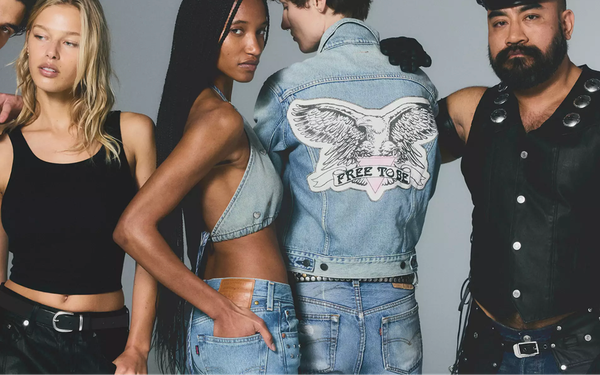
Levi’s Pride collection – “Leatherbound Love” – inspired by the
queer motorcycle clubs who became community protectors – has already sold out of those $230 Pride Night Ride Chaps.
Converse’s Rainbow “Still proud to be” shoe collection is among the
most colorful, and like Levi’s, takes a page from queer history, with an “Inspired by the past. Carrying the future” tagline.
Calvin Klein (of course) is back with a limited-edition
collection, with a creator-led campaign spotlighting artist Deon Hinton, choreographer Sam Salter and model and athlete Jordan Rand. MAC Cosmetics took to Instagram with Pride Month’s marching orders:
“EVERYONE GET MORE GAY RIGHT NOW.” And H&M is reminding customers of its long-standing support, including sponsorship of parades in New York and Los Angeles.
There are even some
partnerships. Diesel and Tinder have a 19-piece capsule collection called “For Successful Loving.”
It’s noticeable when brands sit it out. “Pride season is a predictable window for all brands
to show up and be counted — even if not splashy or merely performative,” says Bob Witeck, who heads Witeck Communications, a values-based PR agency in Washington D.C. “LGBTQ+ consumers tend to
be cynical — based on their market experience — and to judge brands by their authenticity and consistency. Reputation is built on trust, pure and simple.”
But Litman pushes back on
framing the silence purely as a failure of nerve. The mid-2010s wave of rainbow logos left a lasting hangover: nearly half of Gen Z say advertising around an unrelated cause is no more than a sales
ploy. “Getting criticized for rainbow washing stings,” he says, “and some brands would rather go quiet than risk it.”
The risk of ignoring Pride? Missing a “massive economic benefit,” says
Haid. “Consumers want to hear from companies on important social and environmental issues and when they stay silent, it feeds distrust.” He points to recent Deloitte research finding that trusted
companies outperform peers by up to 400% in market value.
Haid sees some logic in not participating— but only up to a point. “If you aren’t supporting the LGBTQ+ community in real ways,
then it’s better to stay silent, especially in this current environment.” What’s disappointing, he says, is that many companies are showing up behind the scenes and making genuine impact. “They should
be rainbow shouting to spur other companies and combat the misguided narrative that people don’t care about inclusion any longer.”
Consumers expect authenticity over performance, says Dayna
Carney, founder of Dayna’s House, a content creation agency that works with such brands as Sephora and Hoka. “Consumers want to see more from brands, but they need it to feel authentic and real. It
needs to have added value in the storytelling and not just be a simple post.”
And the brands sitting this out may be miscalculating their audience entirely. “Nearly one in four Gen Z adults
identifies as LGBTQ+,” says Litman, “and they’re not measuring participation by whether a brand posts in June. They’re measuring it by whether the company’s hiring, benefits, and partnerships reflect
anything real.”