

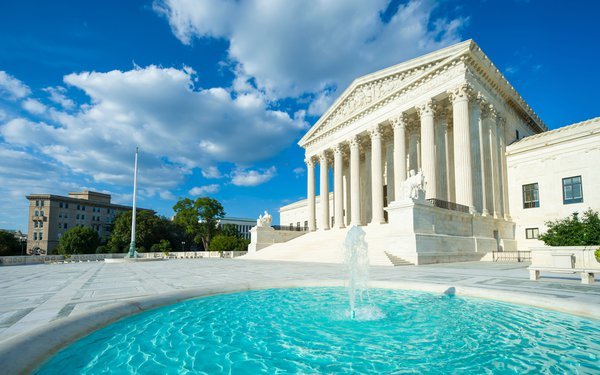

The Supreme Court on Tuesday rejected Meta Platforms’
request to intervene in a lawsuit brought by Vermont’s attorney general, clearing the way for the state to attempt to prove that the company “addicted” young users.
As is
customary, the justices didn’t give a reason for their decision to turn away Meta.
The court’s move comes in a battle dating to 2023, when Vermont claimed in a lawsuit that Meta violated a consumer protection law by allegedly incorporating design features that “cause
teens to use Instagram compulsively and excessively.”
Dozens of other states made similar allegations in
separate lawsuits against the company, as have school districts, teens and families.
advertisement
advertisement
Meta sought an early dismissal in Vermont. Among other arguments, Meta said it lacked the
kinds of connections to Vermont that would give the state jurisdiction.
Vermont’s Supreme Court rejected that argument, writing that Instagram has teen users in Vermont,
and sells advertising to Vermont businesses that target users in the state.
“Meta has purposefully availed itself of the Vermont social-media and advertising market,” Justice
Karen Russell Carroll wrote in a June ruling.
She added that Meta’s business model
“depends on advertising revenue,” and creates an incentive for Meta to attempt to keep Vermont teens on Instagram for as long as possible.
Earlier this year, Meta urged the Supreme Court to review that ruling, essentially
arguing a national business model doesn’t subject the company to jurisdiction in every state.
“If a state court may exercise specific jurisdiction over a defendant based
on its ‘business model,’ nearly every large national business … is at risk of being haled into the courts of all 50 states,” Meta argues.
The tech industry group NetChoice
backed Meta’s request, arguing in a friend-of-the-court brief that the Vermont court’s ruling will result in “immediate and severe consequences for the internet economy,” unless overturned.
The organization contended that the Vermont ruling effectively leaves all web companies that accept advertising from a business in a particular state at risk of being brought to court
in that state, and forced to face claims that have no relationship with advertisers from that state.