
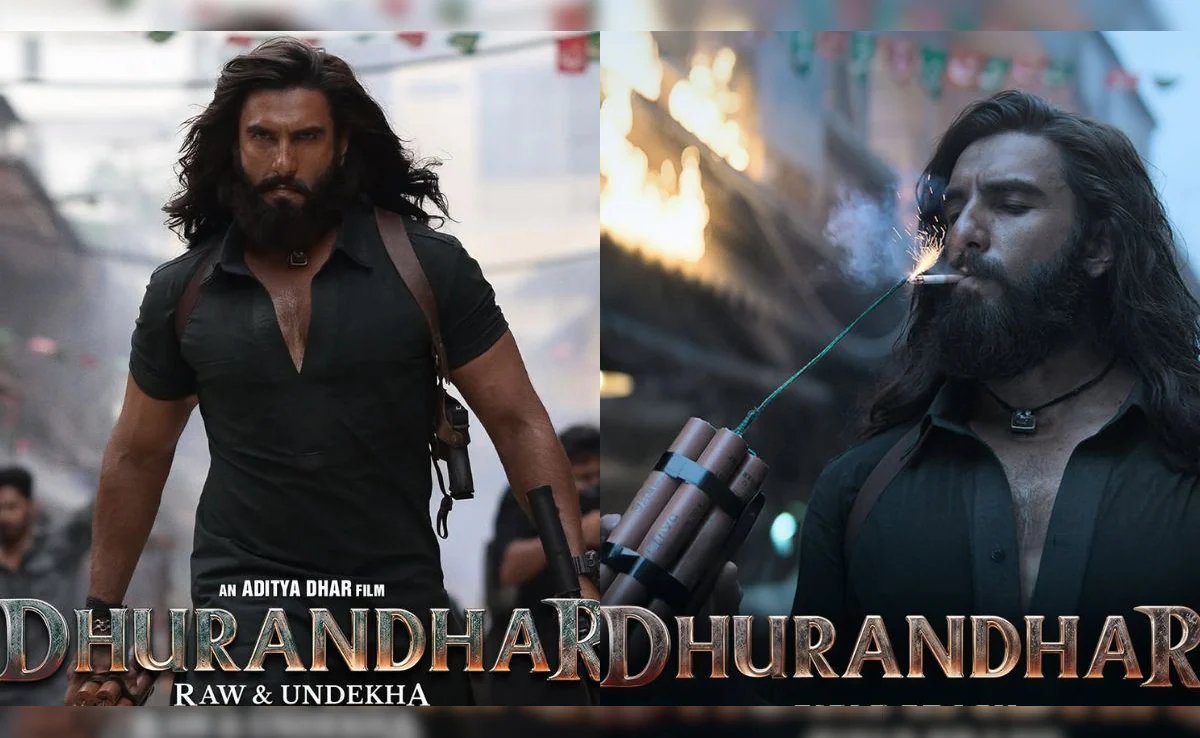
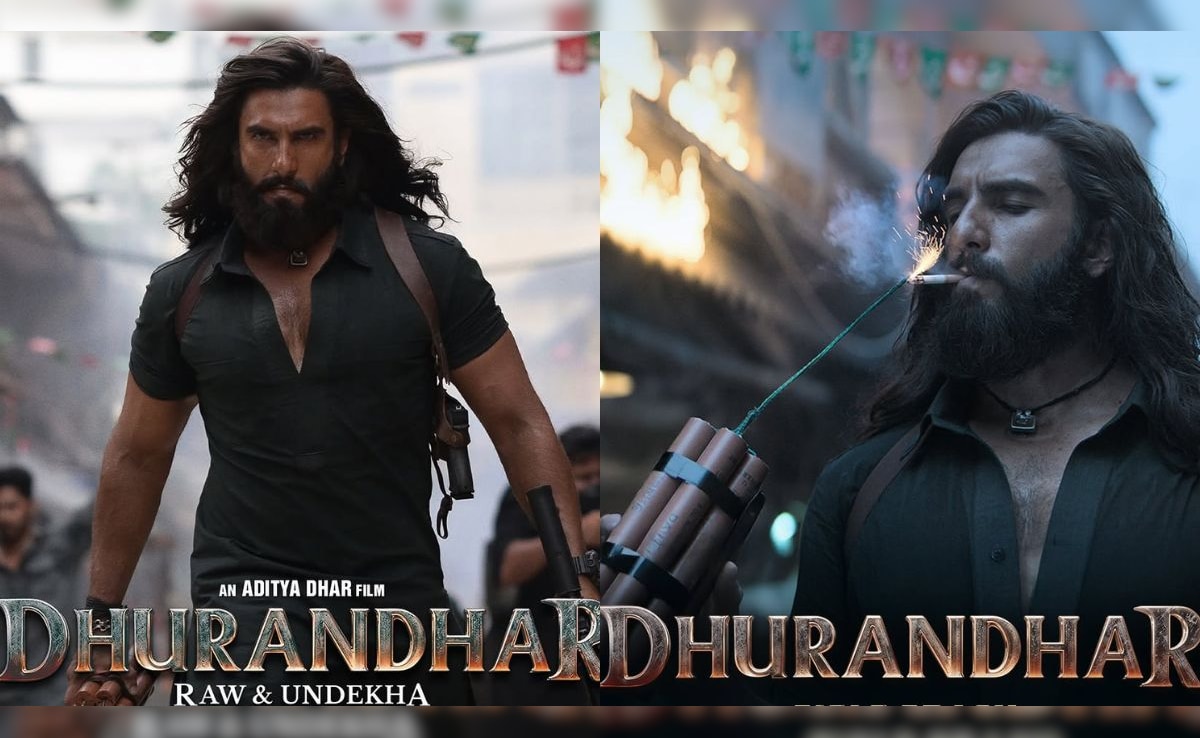
When Ranveer Singh-led Dhurandhar first hit theatres on December 5, 2025, it quickly became a talking point for its scale, performances, and gritty storytelling. The theatrical cut, running 3 hours 34 minutes, delivered a polished but censored version of Aditya Dhar’s violent, politically charged world.
It was followed by its OTT release on January 30, trimmed slightly to 3 hours 25 minutes, raising questions about edits and pacing. Now, with the release of Dhurandhar: Raw And Undekha on May 22 simultaneously on Netflix and JioHotstar, the conversation has shifted entirely.
Despite retaining the same runtime as the OTT version, the new cut promises something very different – not in length, but in experience. So what exactly changes? And is it truly “raw and undekha“? Let’s dissect.
Same Film, Sharper Edge
To begin with, the most important clarification: there are no additional scenes in Raw And Undekha. The narrative remains untouched, with no extended arcs or newly added moments.
However, what does change is the texture of the film.
The opening Kandahar hijack sequence featuring R Madhavan immediately sets the tone. It feels noticeably more brutal. The difference lies largely in colour grading and visual intensity – the blood appears deeper, wounds more defined, and the overall frame carries a harsher, more unsettling tone. It is not new material, but it certainly feels more violent.
Unfiltered Dialogues: The Real ‘Raw’ Element
The biggest and most striking difference is in the dialogues. If the theatrical version held back, Raw And Undekha does the opposite. It removes filters, unmutes words, and allows characters to speak in their most authentic, aggressive, and unrestrained voices.
Right from the beginning, when Hamza Ali Mazari enters Lyari, the shift is evident. The confrontation with Babu Dakait’s men feels more raw, particularly when one of them orders, “Khol, b*******d, iski.” (Strip him down.) It signals that Aditya Dhar has deliberately stepped away from censorship.
Interestingly, in this version, people are more easily able to connect the dots – perhaps because they have already seen part 2.
Jameel Jamali, for instance. Having already seen part 2, viewers now notice subtle behavioural cues – a glance, a pause, a reaction – that previously went unnoticed. His presence feels more layered, allowing audiences to rethink his motivations and actions within part 1.
Similarly, the portrayal of Uzair Baloch undergoes a tonal shift. Earlier presented with restraint and composure, he now reveals a more volatile side. His language – filled with expletives – contrasts sharply with his previously cleaner image in part 1, and this change is largely driven by the unfiltered dialogue.
A powerful example comes during the death scene of Rehman Dakait’s elder son. Even in grief, Uzair’s line – “Ghar ke bacche ko nahi marna chahiye tha, B*******d, S***a” (You should not have killed someone else’s child) – creates a jarring emotional contrast, blending sorrow with rage.
The same applies to Hamza, whose dialogue delivery now feels more instinctive than controlled, relying heavily on expletives to express intensity.
Scenes That Hit Harder
Certain moments gain a completely different impact due to unmuted dialogues.
Take Arjun Rampal’s Major Iqbal, especially in the aftermath of the 26/11 attack. His speech – “Koi Ihudi ya firangi mile, bilkul maat chhor na, sab kaafir hai b*******d. Aurat, baccha, budha sabko maarna hai.” (If you find any Jew or foreigner, don’t spare them at all – they are all kafirs. You have to kill everyone – women, children, the elderly.) – becomes deeply unsettling and far more chilling in its unfiltered form, heightening the ideological extremity of the character.
Then comes Sanjay Dutt’s SP Choudhary Aslam, arguably one of the biggest beneficiaries of this version. His entry scene – featuring impersonation, killing, and confrontation – now fully reflects his personality: crude, fearless, and morally unrestrained.
Lines such as, “Abey B******e, kahan bhaglega M4 se?” (Where do you think you’re running from an M4?) and “Tujhe kya lagta hai, Bade sahab C*****e hai? Kya laga Mufeed ke sath milkar Bade sahab ke maal mein se chori kar loge aur l**d uthake nikal loge?” (What do you think of Bade sahab? Did you think you could team up with Mufeed, steal from Bade Sahab’s stash, and just walk away?) – explain why the theatrical version had muted him so heavily. Yet, notably, the word “Baloch” remains muted, suggesting selective censorship even in this uncut version.
Rehman Dakait And the Raw Confrontations
Akshaye Khanna’s Rehman Dakait, too, appears more aggressive and blunt. His confrontation with Hamza stands out: “Kaunsi teri ammi chhinli tujhse? Mujhe sikhayega M*******d?” (What, did someone snatch your mother away from you? Are you going to teach me?) The repetition and delivery amplify his dominance and unpredictability.
In the climactic face-off between SP Aslam and Rehman Dakait, the violence is emotional as much as physical. Rehman’s repeated screams of “Marr ja M*******d (Just die)” elevate the tension, making the scene far more visceral.
Hamza’s Transformation Peaks In The Finale
The final act sees the most dramatic shift in Ranveer’s Hamza.
As he carries Rehman Dakait on his shoulders, desperately trying to stop vehicles, his outburst – “Gadi rok M*******d. Tum logo ki M….Ruk B*******d ruk. (Stop the car)” – is shocking not just for its language but for what it represents: a complete emotional breakdown – not to save Rehman but to finish him this way.
It is perhaps the only moment where the audience genuinely pauses to process that this is Hamza speaking – a proof to how much the tone alters character perception.
What Doesn’t Change
Despite its Raw and Undekha label, the film stops a bit short of becoming truly Undekha in every sense.
– No extended scenes
– No additional gore detailing
– No longer sequences of violence
This version of Dhurandhar focuses more on dialogue realism than visual brutality. Even the blood scenes, though slightly enhanced in colour, do not feel significantly more detailed.
To sum up, we can say Dhurandhar: Raw And Undekha is less about showing something entirely new and more about revealing what was already there but muted.
It offers: A more authentic soundscape
– Stronger emotional intensity
– Sharper character edges
But it does not drastically alter the core cinematic experience.
If the theatrical version was controlled and composed, the Raw And Undekha cut is its more impulsive, unfiltered counterpart – louder, harsher, and undeniably more real, even if not entirely “undekha.”
Also Read: Dhurandhar ‘Uncut’ Version To Stream On Netflix And JioHotstar Tomorrow Amid Sequel Legal Trouble