

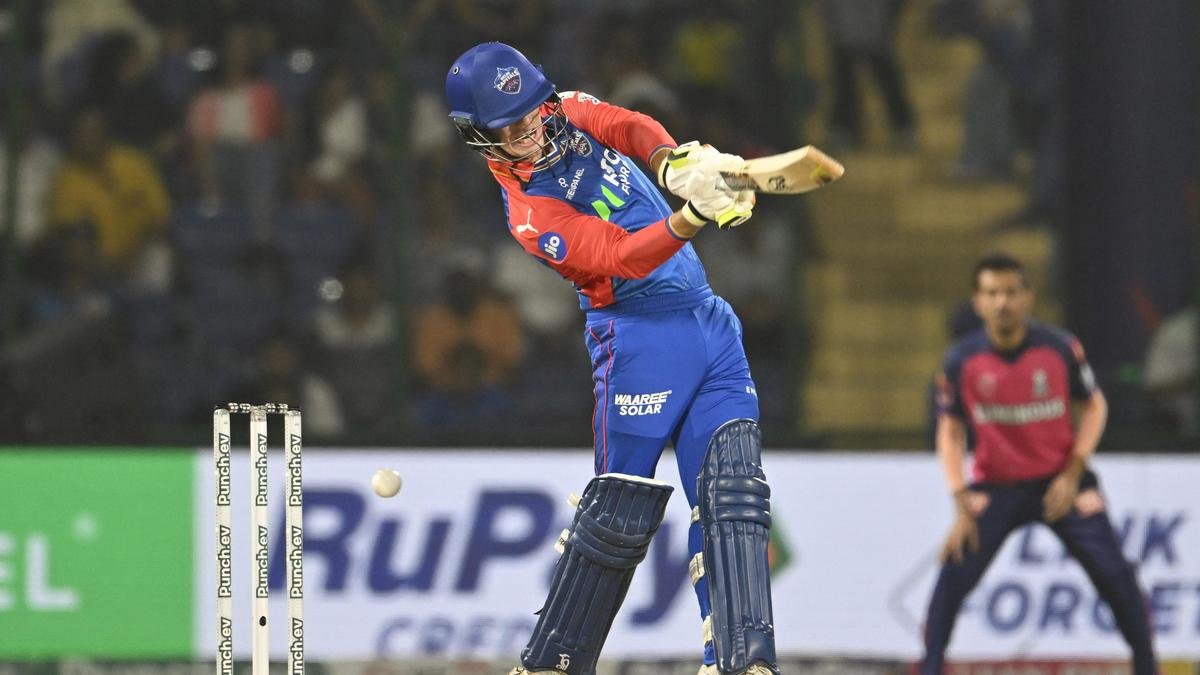
At the time of writing, even as the final week of the league stage of the IPL starts, the four playoff qualifiers have not been decided. Yes, two teams, Mumbai Indians and Lucknow Super Giants, are out of the reckoning, but to get into the final week and still have eight teams in contention for the playoff places is perhaps an indication of how teams have leveled out over the years.
The young batting talent on display is exciting when they get going, to say the least. That said, these very same batters, when confronted with a slightly spicy pitch, are fending deliveries off their faces quite awkwardly. It makes you wonder if they will last the course in red-ball cricket, where bowlers are trying to get a batter out and not just looking to restrict the runs as in the limited-overs formats.
What this year’s IPL has also done is once again expose the folly of picking some batters on the basis of a single performance in the previous season. With T20 leagues mushrooming in virtually every city, where the talent is pretty ordinary, it is easy for scouts to get carried away by some players’ big-hitting. On pitches where the ball hardly bounces above the midriff, and boundaries are half the size of the IPL grounds, it is easy to hit sixes and look good. Then, when one is bought for multi-crore figures and is confronted by international-quality bowlers on pitches with a little more bounce than city league pitches, along with bigger boundaries, the batter is thoroughly exposed. There is double pressure: the expectation created by the fee paid and the challenge of facing international-quality bowling.
Similarly, in bowling, on sub-standard pitches, one can look menacing, but on good pitches in the IPL, with bigger boundaries and against world-class batters, the pace drops very quickly. In India, we tend to get excited if a bowler delivers at 145 kmph. Suddenly, he is called a sensation and whatnot. But real speed is above 150 kmph, and there are not too many bowlers who are able to do so consistently.
The fact is, most, if not all, these city leagues are nothing more than ‘mohalla league’, where the overall standard is pretty low, and to think that a scout has unearthed the latest gem is to fool oneself. The gem is quickly exposed as glass. Most times, if the player has been fortunate enough to be in a bidding war and fetch crores, then not only does the pressure build, but there is also a visible relaxation of effort. The idea then is to just do enough to stay in the team and get another contract the following year.
The franchises seem to have learned their lesson, albeit after a few seasons, and many a one-innings performer found himself ignored at the auction after one standout innings had earlier earned him a few more seasons. It could well be the case, especially for a few so-called six-hitters who do hit a six and are then dismissed the next ball. If they keep doing that in most matches, their strike rate will be very impressive, but the overall impact on the game will be negligible.
It is important to carry on and take the team to a good total or take them home if the team is chasing a target, but that rarely happens with the six-hitters of the mohalla leagues. Even in the IPL format, a batter needs a reasonable technique, as bowlers are capable of delivering a top ball far more often than in the city leagues. While T20 is a game made for sixes, it does not mean sluggers will dominate. If anything, sluggers fail regularly.
Speaking of failure, one can totally understand the sense of frustration that our champion badminton doubles pair felt at the lack of recognition for their achievement in winning the bronze medal in the Thomas Cup. Four years back, they had won the Thomas Cup, which is like winning the World Cup in other sports. Here, too, the reaction was not as big as it should have been. Perhaps those who do not play badminton do not understand what a tough and demanding sport it is, and so fail to grasp the magnitude of the triumph.
Rather than blaming the general public, it would be a good idea to see if the public was adequately informed by the electronic and print media about the fantastic achievement. How does the general public know where and when the tournaments are unless they learn about them from the media?
While there is the Indian Express with terrific sports pages covering all sports, most other print media and websites would rather glorify a cricketer who gets two wickets or hits two sixes in an IPL game. His whole family, uncles and aunties, his village and school teachers, and anyone and everybody are interviewed, and half the sports pages are devoted to that.
The die-hard badminton fan will find out from somewhere, but it is the ordinary sports lover who remains in the dark, who will not know the result, and so will be unable to express joy at India winning the badminton equivalent of a World Cup. Kidambi Srikanth tossing his racquet and holding his face after the point that India won the Thomas Cup is etched in the minds of badminton fans forever.
Do not worry about the numbers, Satwiksairaj. You perhaps have little idea how much badminton fans adore you and your colleagues for bringing India not only the gold then, but also for giving your all to bring home the bronze just a few weeks ago.
[The column was written before the three IPL Playoff teams were decided]
Published on May 21, 2026