
OpenAI has embraced retro-style advertising as it markets
generative artificial intelligence (AI) that can produce vivid images and natural-sounding conversations, aiming to raise brand awareness ahead of a potential initial public offering (IPO).
The retro vibe might also work for all types of brands as consumers attempt to pull back on technology and settle in to being human once again. Many young working professionals have mixed feelings
about their future living and working with AI.
OpenAI’s recent retro message comes across loud and clear in a 30-second campaign that The New York Times reported was done by the
creative agency Isle of Any. It has a retro vibe and attempts to bring the viewer into the days before everyone carried smartphones.
“Dish,” a TV spot, as the NYT
describes it, “is steeped in references to the old, analog world,” with a stack of books that decorate an apartment, along with a white 1950s-type gas stove, and a mid-century modern light
fixture. The song “Fool” by the indie artist Perfume Genius plays in the background.
advertisement
advertisement
OpenAI wants users to know they can keep the human aspect of life and integrate technology to
find the best recipes for a first date, the best books to read based on a person’s specific interests, and the best trip to take in the summer versus the winter.
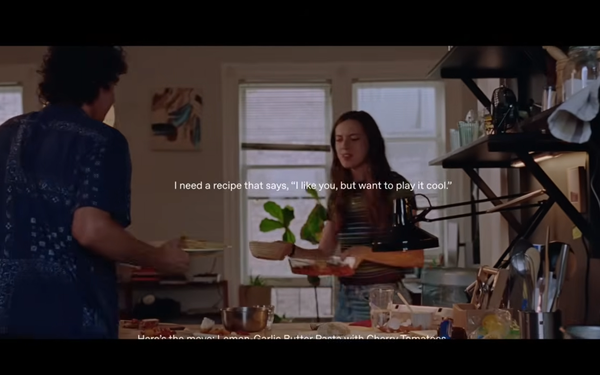
In this ad, a prompt
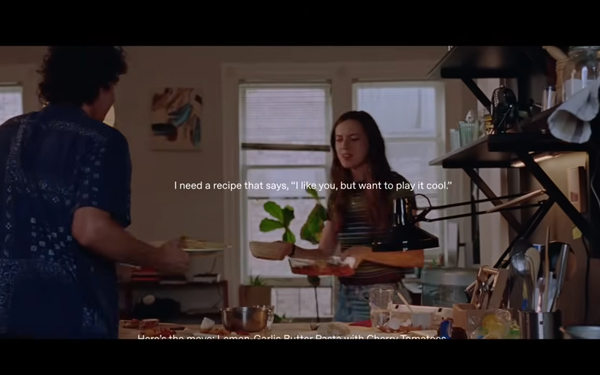
appears on the screen “I need a recipe that says, ‘I like you, but want to play it cool’,” by a young man trying to make dinner for a young woman.
ChatGPT replies:
“Here’s the move: Lemon-Garlic Butter Pasta with Cherry Tomatoes,” it begins. After laying out the recipe, the bot comes through with the encouraging words of a coach or buddy:
“Above all, don’t sweat it. You got this.”
“Trip” is another ad that lets reality back in, meaning that it brings nature back to humans. It features a Gen Z
brother and sister who begin a road trip in a Volvo 240 station wagon, which has not been manufactured since 1993. The vehicle disappears into a rural landscape, but not before “Brother
Love’s Travelling Salvation Show” by Neil Diamond released in 1969 plays on the radio, and directions by ChatGPT scrolls on the screen on planning the trip.
Many campaign messages
are contrary to the product being sold, as the NYT points out. “Insurance companies, which necessarily deal in car crashes and death, present a comic face to the world: Progressive goes heavy on the shenanigans of the character Flo and her pals, and Geico features a lovable lizard,” reports the NYT. “Similarly, many commercials for
prescription medications show people cavorting in idyllic settings, rather than the maladies that the drugs treat.”
OpenAI ran a study about nine months ago on who uses ChatGPT. As of
mid-2025, ChatGPT’s early gender gaps have narrowed. The adoption resembles the general adult population. In January 2024, among users with names that could be classified as either masculine or
feminine, 37% had typically feminine names. By July 2025, that share had risen to 52%, according to the company’s data.
The paper, published in September 2025, shows that ChatGPT
consumer use is largely about getting everyday tasks done.
Three-quarters of conversations focus on practical guidance, seeking information, and writing — with writing the most common
work task, while coding and self-expression remain niche activities.
Search terms revolve around Asking, Doing, and Expressing. Some 49% “ask,” while 40%
“do” and 11% “express.”
Frankly, I have yet to speak with one person who does not know the basics of what OpenAI’s ChatGPT does.
Ken Goffman, a tech
writer who goes by R.U. Sirius on Instagram, “seemed puzzled the campaign did not try to convey the full power and
potential of artificial intelligence,” reports the NYT. “It’s a very cautiously denatured version of what ChatGPT and other A.I.’s are bringing to the world,” he
wrote. “They seem to be reaching out particularly to dull young people.”
But I get it. Sometimes we humans, as my grandson calls us, need a break from technology to reenter the
real world, and it seems best that brands that are looking to connect with us “humans” take a moment to remember who we are — really.