
When Yeh Jawaani Hai Deewani released in the final week of May 2013, it looked like standard Dharma Productions template with glossy stars, gorgeous locations, and a predictable “opposites attract” trope. Yet over the next 13 years, YJHD pulled off two remarkable feats. First, it transcended its summer blockbuster status to become a crucial monument of pop-culture, deeply resonating for both millennials and Gen-Z. Second, upon revisiting the film recently, I realized its emotional beats and vibrant energy haven’t really aged. Ayan Mukerji’s mainstream rom-com achieved that elusive cinematic feat in modern entertainment: a genuine, unyielding shelf life.
Having made his debut at just 26 with the coming-of-age drama Wake Up Sid (2009), Mukerji was hyper-aware of his generation’s anxieties. He wanted to capture the confusion, longing, ambition, and mess that defines urban youth but in a full blown bollywood masala style. Born into a prominent film family, his vision for Yeh Jawaani Hai Deewani was to fuse the grandeur of old-school Bollywood romance he grew up watching and internal restlessness of young people he saw around him.
Advertisement – Scroll to continue
The story itself was deceptively simple. As Ayan Mukerji had beautifully summarized in an interview, it was about friends who “meet, separate, grow, and meet again… but are never the same.” We watch Bunny (Ranbir Kapoor), Naina (Deepika Padukone), Avi (Aditya Roy Kapoor), and Aditi (Kalki Koechlin) head out on a Manali trek. A sun-drenched first half packed with electric chemistry and pure fun. Then life happens, drifting the four friends down vastly separate paths. It takes eight years for their paths to cross again at Aditi’s grand destination wedding in Udaipur when the old feelings and memories come rushing back.
Yaadein mithai ke dibbe ki tarah hoti hain, ek baar khula to sirf ek tukta nahin aha paoge.
When The Casting Clicked
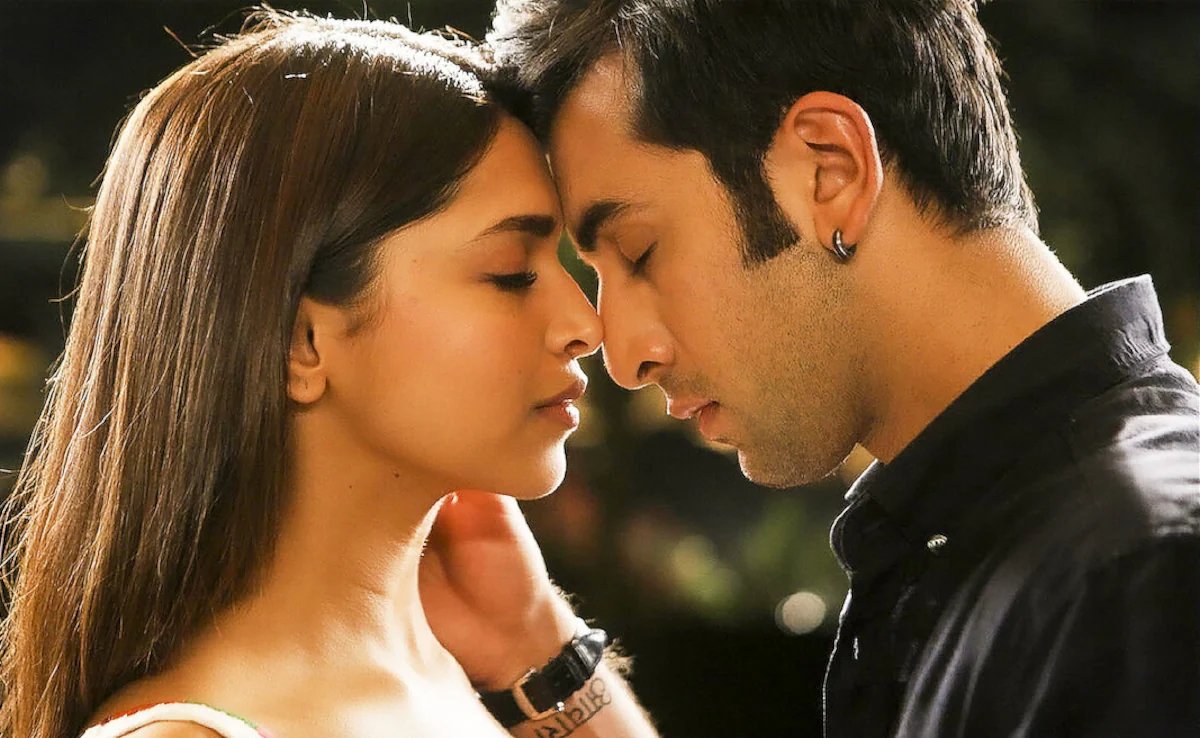
The real lightning struck with the casting. Pairing Ranbir Kapoor and Deepika Padukone just a few years after their highly publicized real-life breakup was a risk. But it worked brilliantly, anchoring the film with a raw, lived-in vulnerability. When Naina looks at Bunny, you feel a shared history that bypassed the script entirely. Bunny himself was a character defined by a desperate, almost toxic wanderlust. He leaves his dad, dumps his best friends, and walks away from the girl who loves him, all because, “Main udna chahta hoon, daudna chahta hoon… bas rukna nahi chahta.”
In the real world, a guy this self-absorbed, who doesn’t even show up for his own father’s funeral, would be impossible to like. He would easily come across as incredibly selfish. But the magic of Ayan’s script and Ranbir’s magnetic charm somehow kept Bunny sympathetic. They successfully convinced us that his selfishness didn’t come from a place of malice but from a deep, terrifying fear of missing out on life. He was literally FOMO personified, and perhaps that restless anxiety struck a raw chord with a generation struggling with similar restlessness: Kahin pahunchne ke liye kahin se nikalna bah zaroori hota hai. Sahi waqt pe kat lena chahiye, nahin to gile shikwe hone lagte hain. The contrast to Bunny’s frantic energy was Naina (Deepika), the straight-laced medical student. While Bunny is constantly running away to find himself, Naina finds peace exactly where she is.
Avi (Aditya Roy Kapoor) is the guy we all know from school or college. He’s the fun-loving friend who masks his failing life and deep insecurities with a loud, partying persona. His true heartbreak doesn’t come from a romance, but from the crushing realization that while his best friend moved on to conquer the world, he got left behind. Meanwhile, Aditi (Kalki) gets the most grounded reality check of the group. She starts as a loud tomboy secretly miserable over her unrequited crush on Avi, but grows up to realize that maturity means letting go of people who don’t value you and choosing a partner who actually does.
On the surface, it’s a story about rich, glamorous kids who can casually fly across the world or throw massive destination weddings. Yet, despite all that wealth, their struggles felt incredibly real to regular young audience. That’s the sweet spot of good mainstream films. They anchor you in genuine human emotion without ever losing their sense of joy and entertainment. Strip away the fancy locations, and the film is ultimately about the universal anxieties of your twenties, career confusion, broken relationships, and the messy process of growing up. Beet ta waqt hai, lekin kharch hum hote hain.
When Aditi video calls to Bunny to tell about her wedding, Bunny replies with a quiet truth: Kya jaldi bade ho gaye hum yaar. The four characters felt like old friends and their camaraderie made everyone long for a trip with their own gang.
And…the brilliant Farooque Sheikh
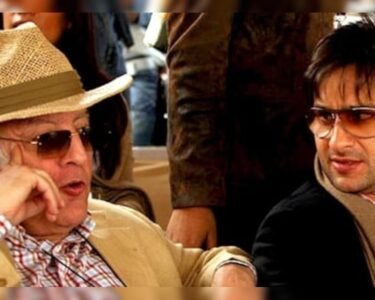
One of the most touching parts of Yeh Jawaani Hai Deewani was Farooq Sheikh as Bunny’s father. With barely any screen time, he gave the film its real emotional core. In a film with grand locations and flashy celebrations, his quiet presence grounded the story. His performance beautifully captured the ache of a doting father who chooses understanding over control, giving his restless son the freedom to fly, even if it breaks his own heart.
The quiet living room scene before Bunny leaves for the airport is one of the most beautifully written moments in modern Hindi cinema. Without any loud, dramatic dialogue, Farooq Sheikh conveys pure, understated tenderness.
Bunny: Aap ro rahe the?
Father: Tumse chhutkara jo mil raha hai.
Bunny: I’ll miss you ya.
Father: Ghar to soona ho jayega tere bagair…anyway, we have to go…
Bunny: Aap khush nahi ho kya papa?
Father: Khush hoon bhai…par thoda selfish bhi hoon. Tumhe khona nahin chahta.
Bunny: To aap kahna kya chaahte ho papa? Ki main America nahin jaoon?
Father: Mere chaahne se koi farq padta hai? Tuney meri kabhi koi baat maani hai?
Bunny: Farq padta hai. Agar aap chhahte ho ki mai nahi jaoon to pahle kah dete…Ab bhi kah sakte ho!
Father: Toh mat jao.
Bunny: Ok!
Father: Tum ye kar sahte ho? Mere liye?
Bunny: Haan.
Father: Tumhara ye kahna hi mere liye bahot hai…Ab suno! Jahan tumhara ji chhahe jao…jo ji chhahe karo…jis tarah zindagi jeeni hai, jiyo. (He hugs Bunny)
Father: Beta ek baat yaad rakhna…zindagi mei chhahe jo ho jaaye, kuch bhi, mai hamesha tumhare sath hoon.
The beauty of this dialogue lies entirely in Farooq Sheikh’s performance. He doesn’t guilt-trip his son. Because they never get a proper final goodbye in the story, his sudden death acts like a heartbreaking reminder that while we’re busy chasing our dreams, time is running out for the people we love, especially our parents.
The Soundtrack Legacy
You cannot talk about Yeh Jawaani Hai Deewani without talking about its music, because the film owes its second life entirely to it. Most modern Bollywood soundtracks explode for a few weeks and disappear. But the music of Yeh Jawaani Hai Deewani stayed culturally relevant, may be because the songs attached themselves to recurring life moments, festivals, weddings, heartbreaks and travel memories.
It dominated the charts in the summer of 2013, and the songs still play everywhere. No Holi party is complete without the ecstatic opening chords of Balam Pichkari. Then there is Badtameez Dil, which is still a mandatory anthem at every club, college fest, and wedding after-party, forever tied to Ranbir Kapoor’s rubber-legged, Shammi Kapoor-style dancing. Even the other high-energy tracks served a purpose. The other chartbuster Dilliwaali Girlfriend as well as the historic coup of casting the legendary Madhuri Dixit alongside Ranbir Kapoor for the item track, Ghagra. Ilahi became the anthem for travelers, still being used in numerous vacation vlogs and reels on social media. But the true soul of the album lies in its quietest track. Whenever life gets overwhelming with burnout, isolation, or the pain of leaving home, Kabira still acts as a source of comfort on quiet, late-night drives.
It is difficult to think of another recent Bollywood album where almost every track has enjoyed such lasting popularity. The soundtrack by Pritam and lyricist Amitabh Bhattacharya achieved something vanishingly rare in modern Bollywood, which is an enduring shelf life.
FOMO To Mindfulness
When the film released on May 31, 2013, it got average reviews but was an instant blockbuster at the box office. But its true achievement happened over the next decade. While the film is consistently fun and glossy entertainment, it works because it hits a very real modern nerve by exploring the battle between personal ambition and the need for emotional belonging. Naina’s iconic advice to Bunny perfectly captures this, “Jitna bhi try karo Bunny, life mein kuch na kuch toh chhootega hi. Toh jahan hain, wahin ka mazaa lete hain na.” It turns out Ayan Mukerji was actually diagnosing our modern psychological affliction with FOMO and pointing us toward mindfulness as the ultimate cure.
Tum pehle bhi into khoobsurat thi, ya waqt ne kiya koi haseen sitam?
Yeh Jawaani Hai Deewani remains one of the last Bollywood rom-coms to truly become pop culture. It stayed light, playful, and joyful, without slipping into the heavy, joyless trauma tone that dominates modern romances in Bollywood. It never tried to lose its big, unapologetic Bollywood heart.
It proved a simple truth that if you treat the Bollywood romantic formula with genuine earnestness, it can still work. And maybe that’s why it still does, at a Holi party, at a wedding celebration or a late-night drive.
ALSO READ | Ranbir Kapoor Explains Why Yeh Jawaani Hai Deewani Should Not Have A Sequel: ‘It Had The Perfect Ending’